Our Manifesto
We build and improve PlottyBot responsibly, prioritizing safety, quality, and respect for the work of others. We will not release features we cannot control, nor will we ever allow PlottyBot to become a tool for violating copyright or devaluing someone else’s work.
Our goal is to increase the joy of writing and reading, and we hope that what we are building will help spread both even further.
Who we are

Alberto Moneti
Co-Founder, Chief Technology OfficerAlberto has been programming since the days when modems made noise and Google was just a promise. He began writing code at the age of 10, in his childhood bedroom, and never really stopped. In the early 2000s he discovered SEO—then still called "search engine positioning"—and immediately grasped its transformative potential for marketing and the web. Right after college, he founded his own software development business, which led him to collaborate with major companies, many of them multinationals. He's the mind behind PlottyBot's algorithm.
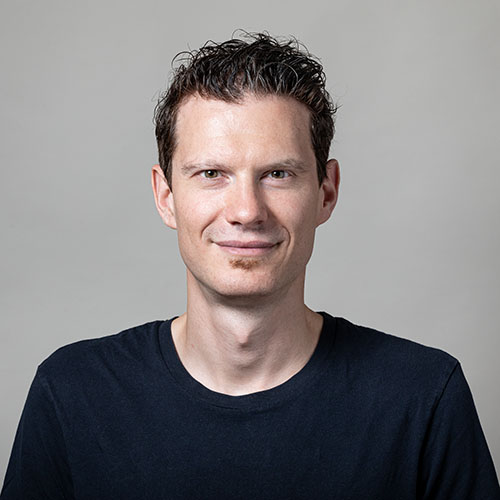
Simone Sassoli
Co-Founder, Chief Growth & Operations OfficerWith a degree in Architecture, Simone accumulated over ten years of experience in Construction Management, leading retail construction projects for luxury brands. Driven by his passion for building and creating, an entrepreneurial mindset, and a deep interest in the digital world, Simone moved into online business—where he found the ideal environment to develop projects quickly and achieve concrete results. Since 2020 he has successfully worked in self-publishing, releasing dozens of books and gaining deep expertise in the editorial mechanisms of digital platforms. He oversees product growth and innovation, exploring opportunities to expand the impact of the platform.
Foundations
Vision
We imagine a world where homes are filled with books created not only by professional writers, but also by everyday people—custom books designed for a specific reader, even when that reader is ourselves. A world where anyone who wants to read a story, learn a topic, or share something with others can turn it into a book without facing technical barriers.We believe that writing can become a simple, everyday act—accessible, enjoyable, and almost magical. A moment for oneself, where any idea can take written form purely for the pleasure of creating it, reading it, or sharing it. In this world, technology never replaces the person—it supports them. Ideas, sensitivity, and creative control remain human; artificial intelligence is a silent partner that enhances creativity without taking ownership of it. We envision PlottyBot as the space where this new way of writing becomes real: a place where authors and readers meet, and where every book is born unique, personal, and authentically human.
Mission
Our mission is to break down the technical barriers that might discourage people from writing, providing a tool that enables anyone to create a complete book—ready to refine, personalize, read, or share. We achieve this by ensuring the highest quality possible: coherent, structured, and readable texts, and by guiding users through the creative process, making it simple and accessible even to those without technical experience. To do this, we train PlottyBot with specific structures and logic for different types of books, ensuring each project rests on solid editorial foundations. Personalization is at the center—both in input and editing. Content is shaped around the reader’s needs and the author’s goals, so each book truly speaks to its intended audience, even when the first reader is the author themselves. At the same time, we protect originality through systems that reduce the risk of plagiarism and repetition. PlottyBot’s writing is generative—not paraphrasing or assembling existing texts—ensuring each work remains unique. We want to do all this ethically and respectfully. This tool is for everyone, but aims to replace no one: it introduces a new way of writing, reading, learning, and sharing, complementing existing work—and hopefully spreading even more love for reading and writing. We put technology at the service of people: the AI assists, supports, and enhances—but never replaces—the author’s creative sensitivity. Ideas, stylistic choices, emotional nuance, and final decisions always remain human. PlottyBot exists to bring those ideas to life and amplify creativity, speeding up the process and unlocking new possibilities, while leaving meaning, direction, and responsibility firmly in the hands of the author.
Values
Accessibility
Everyone should be able to create a book—without technical, economic, or experiential barriers—to give tangible form to their ideas or passions at any level, for any purpose.
Creativity
We support the author—we do not replace them. PlottyBot is designed to amplify human intuition and creativity, not standardize it.
Human First
We put the reader at the center. Technology stays in the background—powerful but discreet, always serving human imagination.
Originality & Respect
We generate unique texts whose copyrights belong to the user. We fight plagiarism and protect intellectual property.
Responsible Scaling Policy
Why Discuss Responsible Scaling for a Writing Platform
PlottyBot allows users to create stories, manuals, and educational content in a very short time. This speed is a major advantage, but it can also amplify errors, misuse, or lack of oversight if not managed carefully. For this reason, we publicly state how we approach growth, safety, rights, and plagiarism. This manifesto clearly explains how we work and the stance we take: specifically, we will not develop or release functions that we believe pose more risks than benefits, and we commit to integrating adequate technical, legal, and ethical safeguards at every stage.
Proportionate Safeguards
We will implement progressive levels of security as the software becomes more capable. The more PlottyBot automates essential parts of the editorial process, the more we will increase controls, limits, and—if necessary—human oversight. Should we introduce advanced automation in the future, we will increase safeguards before releasing them.
Ongoing Risk Assessment
We do not see safety as something 'solved once and for all,' but as an ongoing process. We observe — in aggregated and anonymous form — how the platform is used, what kinds of content are generated, and where sensitive topics emerge. Based on these signals, we update limitations and usage policies. If new risks arise, we intervene. We prefer adapting PlottyBot to real usage rather than letting it operate automatically without supervision.
Transparency About Capabilities and Limits
For us, responsible scaling also means being transparent. We clearly communicate what PlottyBot can and cannot do. We do not promise absolute accuracy, we do not replace the author, and we do not present ourselves as a definitive source of truth. PlottyBot is an advanced writing tool: it speeds up, organizes, and suggests—but it does not think or decide for the user. It does not replace the responsibility of the author or that of professionals such as editors, reviewers, or subject experts.
Rights & Intellectual Property
Our Approach to Copyright
Copyright protection is a core ethical pillar of PlottyBot. We treat content as a valuable asset—not as raw material to exploit without rules. PlottyBot is not, and will never be, a tool for copying books, courses, or someone else’s intellectual work. This conviction is reflected in the technology itself, designed so that—even upon explicit user request—PlottyBot cannot plagiarize texts, works, or protected resources. The platform supports writing; it does not clone existing material. We do not offer tools intended to rewrite a published book chapter by chapter or 'mask' a recently published work by altering a few words. Our stance against plagiarism is not only ethical—it is technical, structural, and permanent.
How Content Is Generated
When PlottyBot generates text, it creates it in real time. It does not use stored books or pre-existing paragraphs: every output results from a generative process, not copying. Our logic makes use of advanced third-party LLM models, developed and trained according to principles of safety, ethics, responsibility, and intellectual property protection set by their creators. On top of these models, we build the 'PlottyBot layer,' orchestrating model behavior, shaping texts based on user input and context, and combining them with language statistics, scenario logic, and a wide variety of textual structures. This ensures new sentences are generated every time—even with similar prompts. Our goal is to minimize, as far as technically possible, the chance that a book, chapter, or paragraph duplicates existing texts—even those previously created by PlottyBot itself. The final touch, however, is always in the author’s hands: they personalize, refine, and make the work uniquely their own.
Copyright & Responsibility for the Work
All content created with PlottyBot—books, manuals, educational materials, or any other texts—belongs exclusively and transparently to the user who generates it. When the user accepts the platform’s Terms and Conditions, they enter into a contractual agreement stating that Surf Publishing SRL, the holder of PlottyBot’s exclusive usage rights, transfers full exploitation rights—including commercial rights—over the generated content to the user. The company does not claim any copyright on the created works. The user is the sole rights holder and may use, modify, publish, and monetize the texts freely. With these rights, however, come responsibilities: the user is solely responsible for how they use the content created with PlottyBot—for complying with copyright laws and national regulations, and for any statements, claims, or information included in published works. PlottyBot provides the tool; the ethical and legal decisions about publication remain fully with the author.